Sauna or cold plunge: which should you buy first?
Last updated: By The SaunaIndex Bench
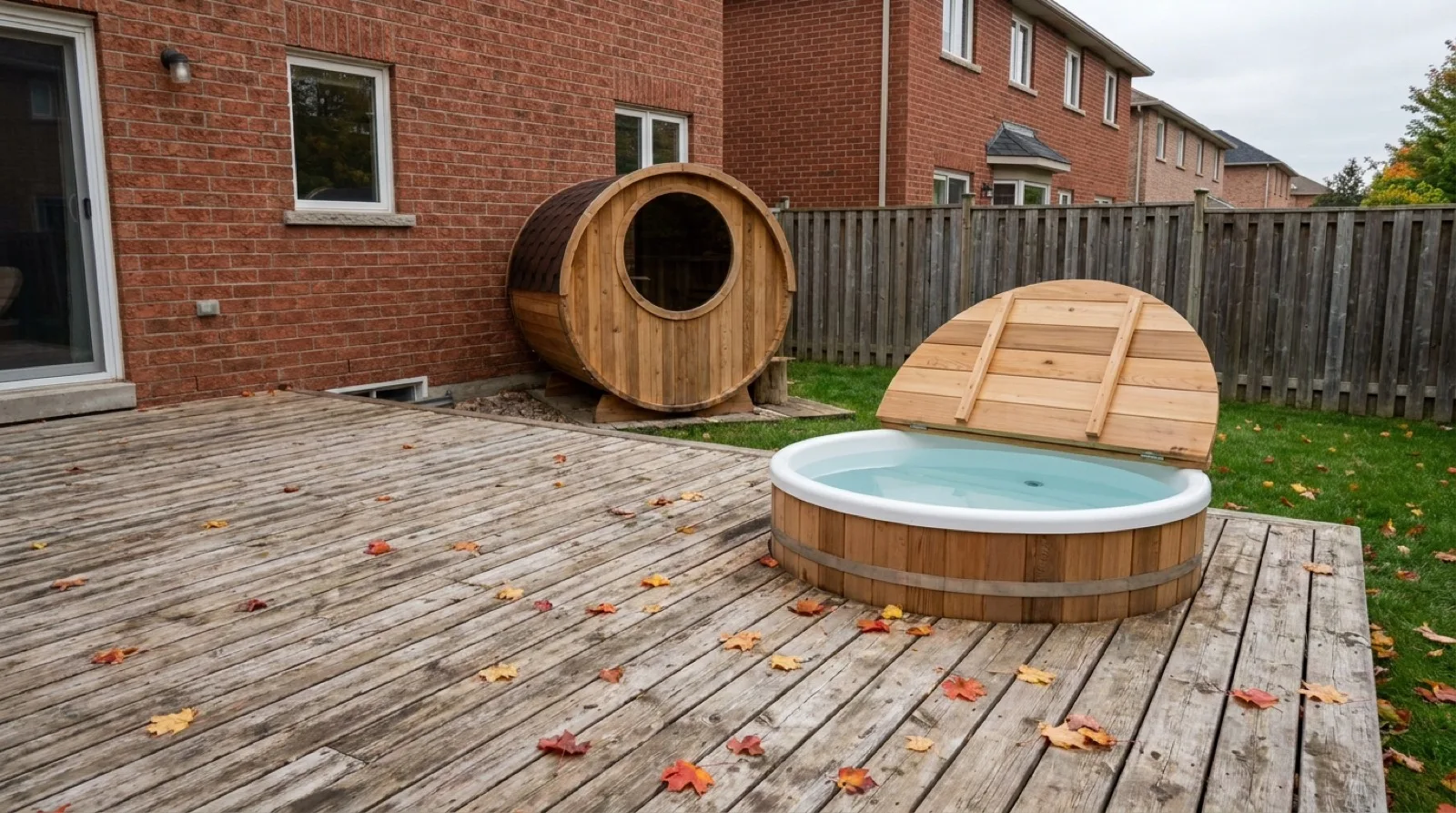
Which costs less to buy, a sauna or a cold plunge?
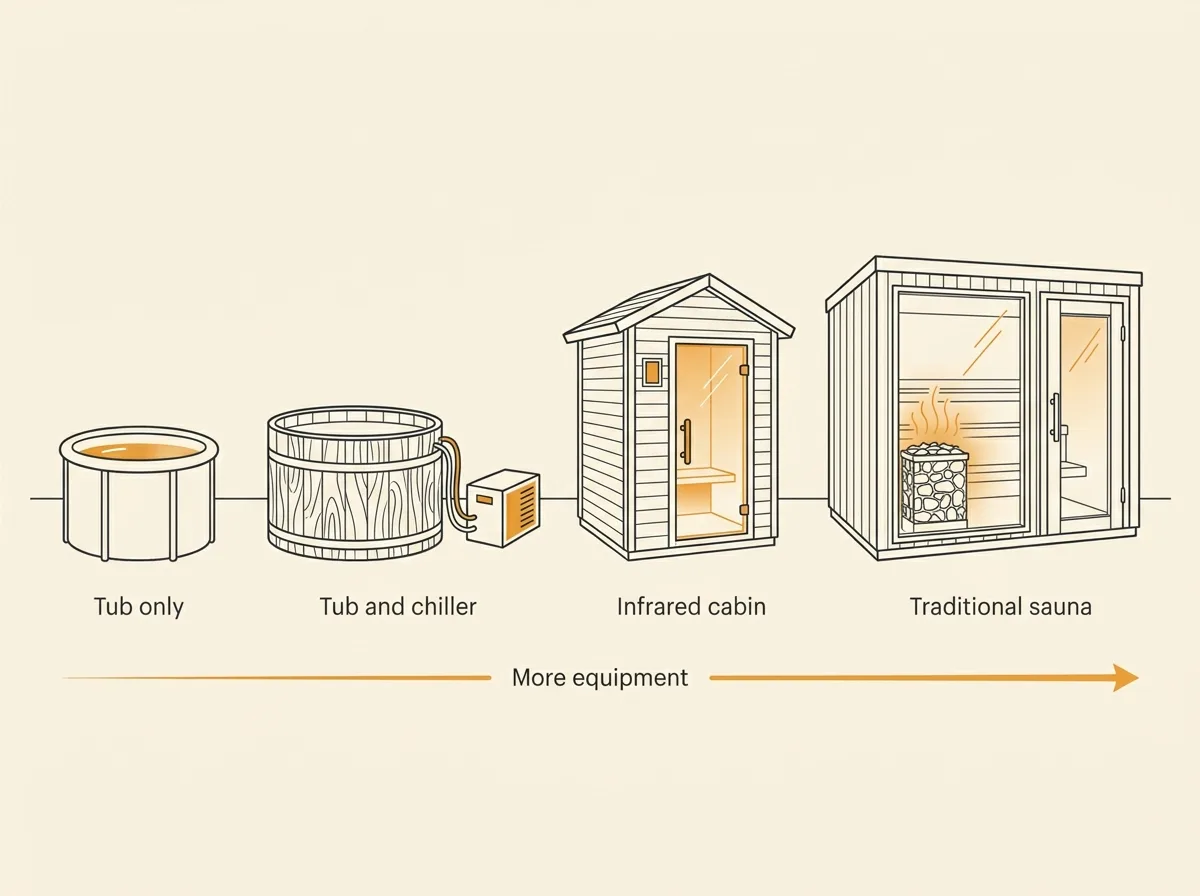
A plunge tub without a chiller costs the least to start. Calore Health and Wellness, a Canadian seller of both saunas and plunges, sells its portable cold plunge tub for $799 as "tub only". A chiller is a small refrigeration unit that keeps the water cold. Without one, you cool the water with ice.
The smallest saunas cost more. SaunaFin, a sauna and plunge seller in Concord, says its lowest-priced saunas in Ontario seat one or two people and cost just over $2,000. Calore's sauna cost guide puts a one- to two-person indoor infrared cabin at $2,500 to $6,000, and a traditional electric sauna kit at $5,500 to $10,000 to start. An infrared cabin warms you with heating panels; a traditional sauna heats the air with an electric heater and stones.
Add a chiller and the plunge overtakes the small sauna. Calore sells the same portable tub with a chiller for $3,499. SaunaFin lists a knotty cedar plunge tub from $4,390 and a chiller from $3,085, sold separately. Hot Tub Outlet sells a Cold Plunge Tub for $7,999.99 as a package of tub and chiller. The cold plunge buying guide covers those options in detail.
Which costs less to own over five years?
Calore publishes five-year cost estimates for both, in two separate guides. They use different assumptions, so treat them as rough ranges from one seller, not a direct test.
For saunas, Calore estimates the five-year cost of ownership at $3,000 to $7,500 for an infrared cabin and $7,500 to $15,000 for a traditional electric sauna. A second table on the same page gives $3,000 to $8,000 and $7,500 to $19,000. For a 45-minute session, the guide's summary puts the power cost at roughly 15 to 35 cents for a small infrared cabin and 60 cents to $1.50 for a traditional sauna. Its own table, at 13 cents per kilowatt-hour (kWh, the unit on your hydro bill), gives 14 to 49 cents and 59 to 88 cents.
For plunges, Calore estimates five years at roughly $8,000 to $26,000 for a tub with a chiller. That covers about $6,000 to $20,000 or more for the equipment, $1,500 to $4,500 for electricity and $600 to $1,800 for filters and cleaning supplies. Its equipment line starts well above its own $3,499 tub and chiller bundle. For a tub cooled with ice, it gives $5,500 to $15,000 or more, and most of that is the ice itself, at about $5,000 to $13,000 or more for daily use.
Your own power price moves these numbers. On 16 September 2026 the Ontario Energy Board listed its Time-of-Use prices, which change with the time of day. The off-peak price was 9.8 cents per kWh and the on-peak price 20.3 cents. These prices cover the Electricity line of your bill. A 9 kW (kilowatt) sauna heater running at full power for one hour uses 9 kWh, which is about 88 cents at the off-peak price. RenoHouse, a Toronto renovation firm, puts a 9 kW heater used four times a week at about $5 a week. The sauna running cost calculator works it out for your own heater.
What does each need from your electrical panel?
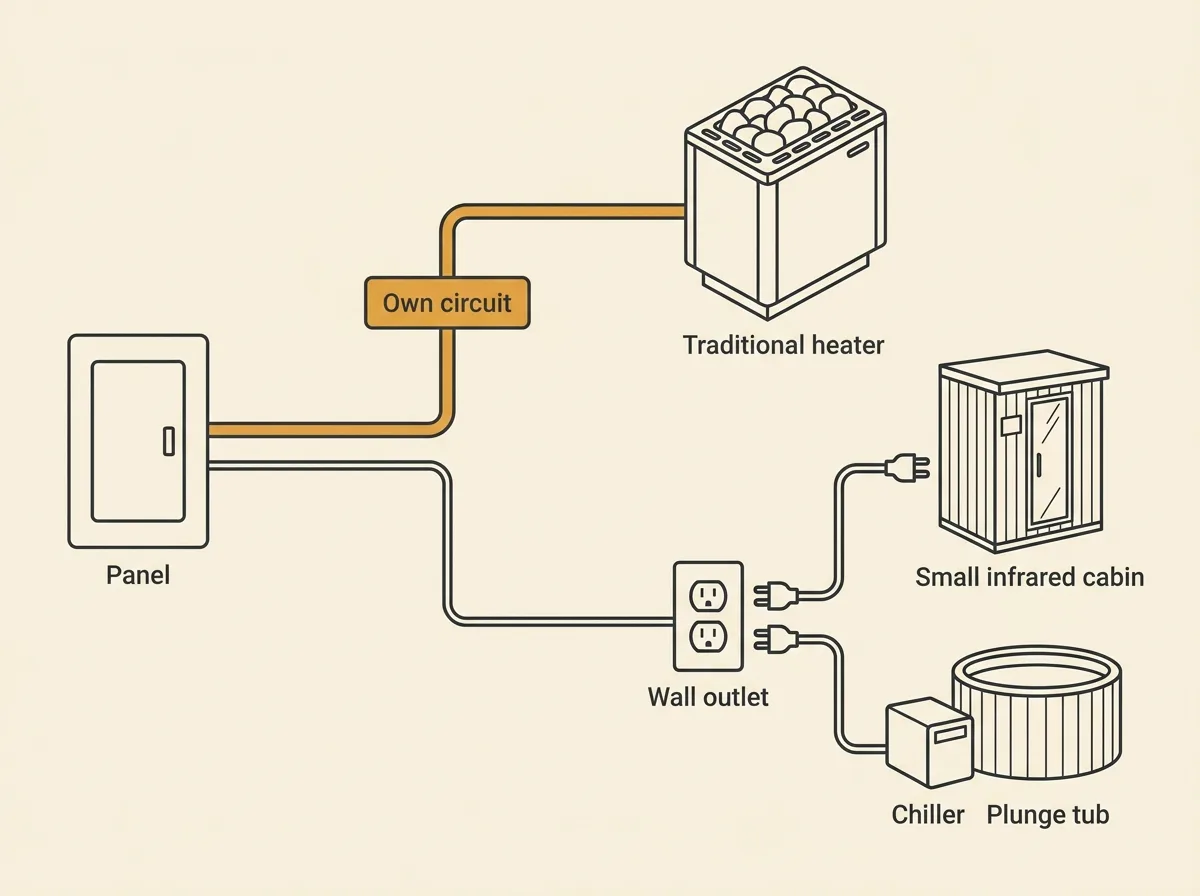
This is often what decides the order. A traditional sauna heater needs a hardwired 240V circuit of its own, meaning a cable wired straight from the electrical panel rather than a plug. RenoHouse prices that circuit at $800 to $1,800 for a heater up to 6 kW, and at $1,500 to $2,800 for an 8- to 9-kW heater. In an older Toronto home already using its full 100 amps, it prices a panel upgrade at $1,800 to $4,500 or more.
Most plunges ask less. Calore's buying guide says most chiller plunges run on a 120V outlet, though a powerful chiller may want its own 20-amp circuit. It adds that the outlet should have a GFCI, a safety device that cuts power if current leaks. SaunaFin lists its chiller at 110V to 120V and 450 watts. Hot Tub Outlet says its $7,999.99 tub needs 120V, 15-amp electrical service.
Small infrared cabins sit in between. Calore says most one- to two-person infrared cabins run on a standard 120V household outlet, so they need no new wiring if a working outlet is close by. The ESA rules guide explains the ESA (Electrical Safety Authority) permit a new 240V circuit needs in Ontario.
Can one company supply both?
Usually. Of the 39 companies in this index, 38 are listed under Saunas and 22 under Cold Plunge & Ice Baths. That means 21 companies carry both labels, 17 are listed for saunas only, and only 1 is listed for cold plunge alone: Ice Works Bath Co. in Newmarket.
In practice, most shops that list plunges also list saunas. SaunaFin, quoted on this page, is one of the listed companies: it is filed under Vaughan and carries both labels. A label means the company describes that kind of product somewhere the index could read. It does not show how much stock a shop keeps, so ask before you visit.
The index also holds no warranty terms or service records. SaunaIndex does not sell saunas or plunges and earns nothing from the sellers named here; the about page and methodology page explain how the listings are built. If you spot an error, the contact page reaches the team.
So which should you buy first?
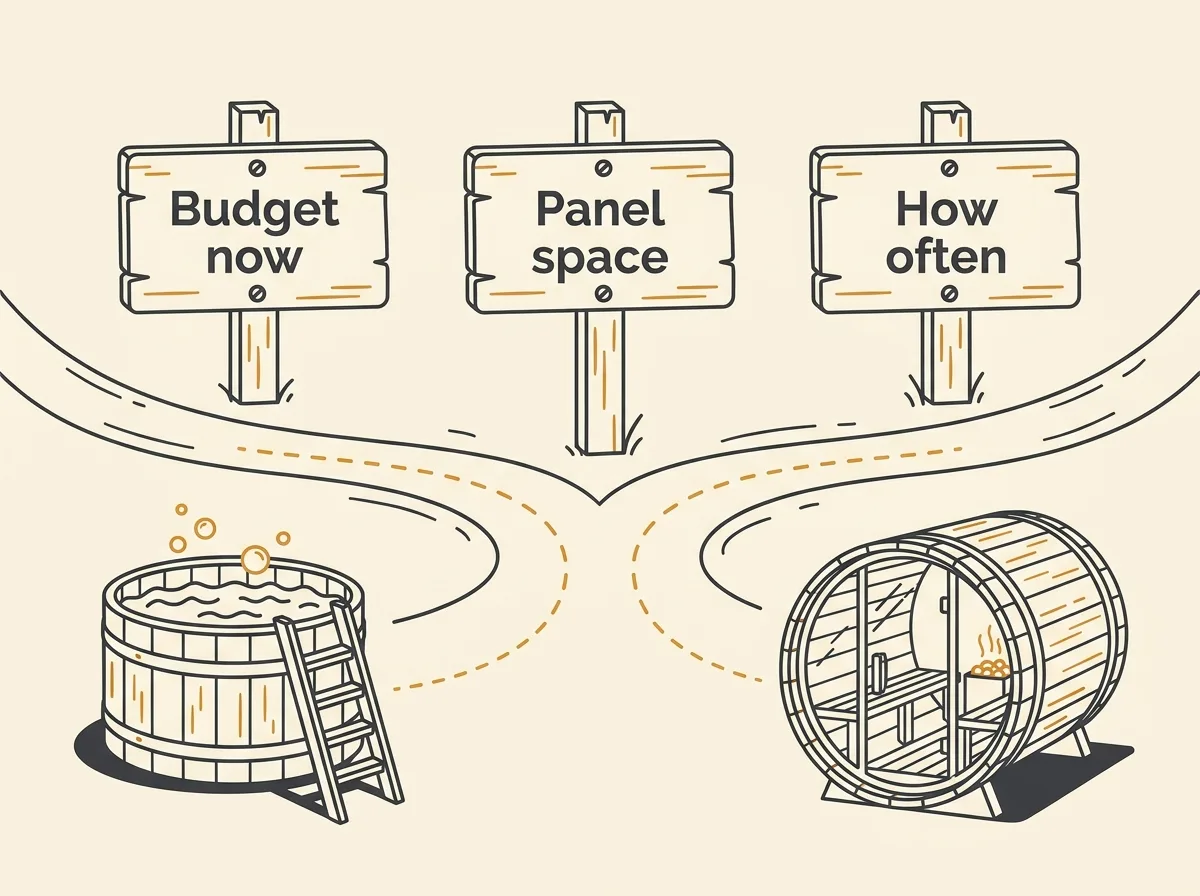
Our reading of these figures: if your budget is under $2,000, the plunge comes first, because nothing else on this page fits. If you can afford either, the infrared sauna has the lowest five-year range in Calore's estimates. Three questions settle it for your own house.
First, what is your budget right now? Under about $2,000, only a plunge tub without a chiller fits, based on Calore's $799 price and SaunaFin's "just over $2,000" for its smallest sauna. Plan for ice: Calore's estimate for daily ice over five years starts at about $5,000.
Second, what can your panel carry? If an electrician says there is no room for a 240V circuit, look at the options on this page that run on a 120V outlet: most chiller plunges and small infrared cabins. If you plan to buy both over time, ask the electrician to look at both loads on the same visit.
Third, how often will you use it? Calore's own figures make daily use the expensive case for an ice-cooled tub, and its per-session sauna costs top out at $1.50.
None of this says which one is better for your health. This site holds no medical data and gives no health advice, so ask your doctor about that part. For the full price lists, see the cold plunge cost guide and the indoor and outdoor sauna comparison.
Frequently asked questions
Is a cold plunge cheaper than a sauna?
- To buy, it can be. Calore sells a portable plunge tub for $799 without a chiller, and SaunaFin says its smallest saunas cost just over $2,000. With a chiller, Calore's tub costs $3,499. Over five years, Calore estimates $8,000 to $26,000 for a chiller plunge against $3,000 to $7,500 for an infrared sauna.
Does a cold plunge need a special electrical circuit?
- Usually not. Calore says most chiller plunges run on a 120V outlet with a GFCI, although a powerful chiller may want its own 20-amp circuit. Hot Tub Outlet says its $7,999.99 tub needs 120V, 15-amp electrical service.
Does a sauna need a special electrical circuit?
- A traditional sauna heater does. It needs a 240V circuit of its own, which RenoHouse prices at $800 to $1,800 for a heater up to 6 kW. Calore says most one- to two-person infrared cabins plug into a standard 120V outlet.
Can I buy a sauna and a cold plunge from the same company?
- Often. Of the 22 companies listed for cold plunge in this index, 21 are also listed for saunas. Only Ice Works Bath Co. in Newmarket is listed for cold plunge alone.
Does this site say which is better for your health?
- No. It holds company listings and published prices, not health or medical data. Ask your doctor before starting either one.
Sources
- Calore Health and Wellness - Portable Cold Plunge Ice Bath Tub (tub only and chiller bundle)
- Calore Health and Wellness - Home sauna cost comparison, the complete Canadian guide
- Calore Health and Wellness - Best Cold Plunge 2026 buyer's guide, prices in CAD
- SaunaFin (Concord, ON) - Saunas For Sale in Ontario
- SaunaFin (Concord, ON) - Plunge Tubs
- Hot Tub Outlet - Cold Plunge Tub
- Ontario Energy Board - Electricity rates
- RenoHouse (Toronto) - Basement Sauna Installation Toronto: 2026 Cost & Permit Guide