Can you put a sauna in a Toronto condo?
Last updated: By The SaunaIndex Bench
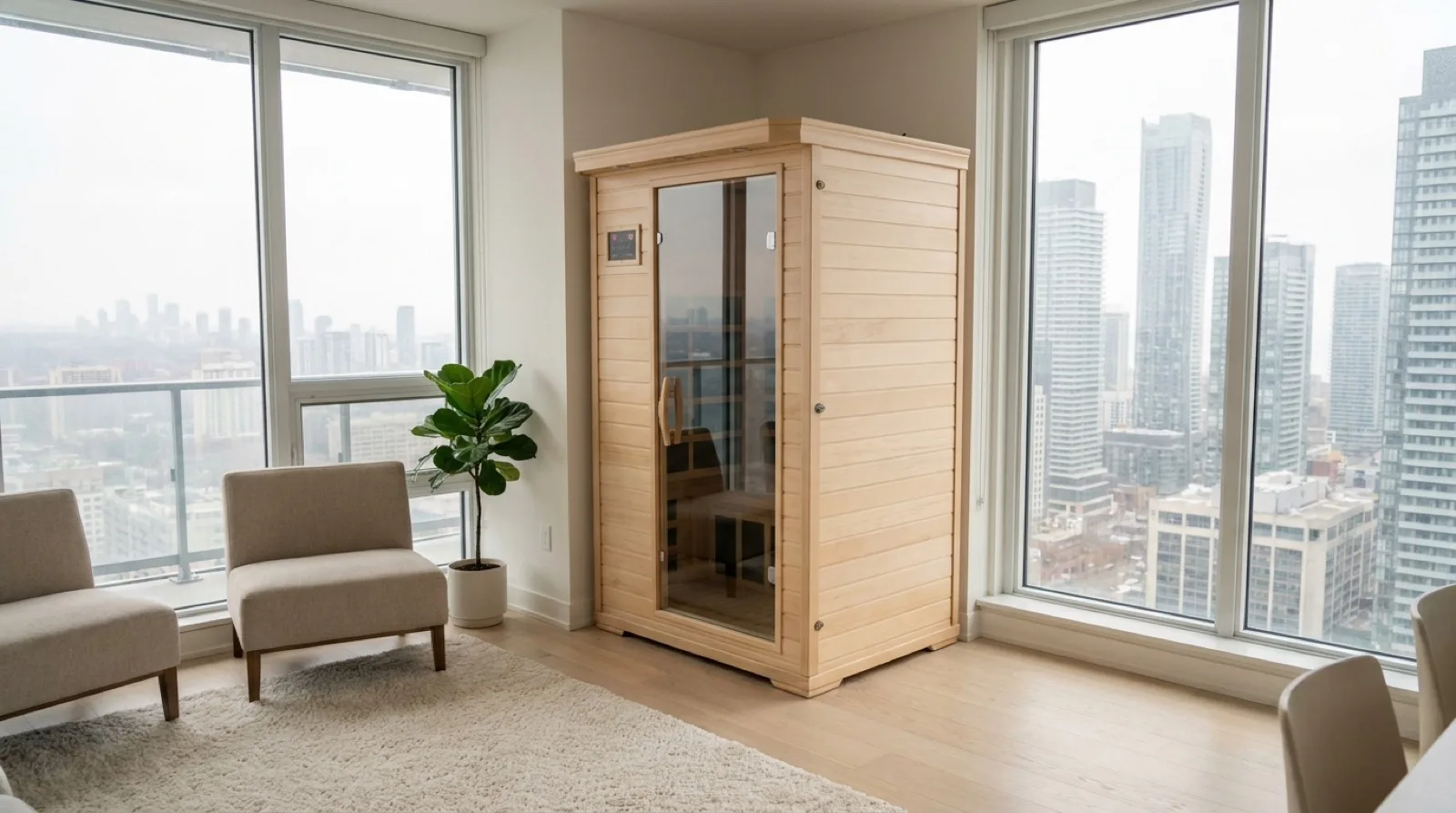
Which sauna can a condo suite take?
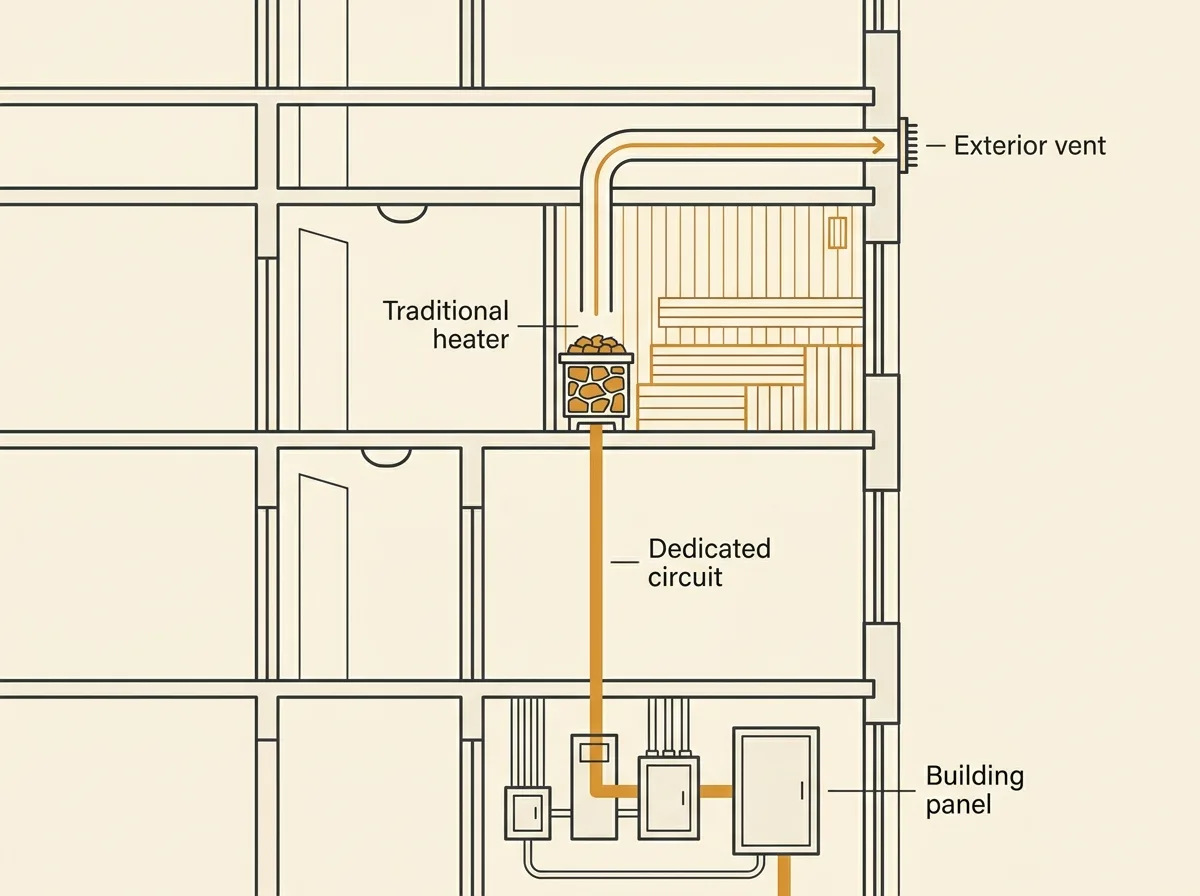
A plug-in infrared cabin is the one kind of home sauna that asks nothing new of the building's wiring. Infrared cabins warm the people inside with heating panels instead of heating the air with a stove. Ottawa Electric, an Ontario electrical contractor, lists a plug-in cabin as a 120V, 15 amp appliance, the same supply as a standard wall outlet. (Volts and amps describe how much power a circuit can deliver.) The contractor says the cabin needs no ESA permit (the Electrical Safety Authority's notice for electrical work) and no building permit. It gives a typical electrical cost of $0 to $400 if the outlet already exists, and it names renters, apartments and small spaces as the buyers it suits.
The same page gives one warning. When a plug-in cabin trips a breaker, it is usually sharing a circuit with a space heater, dehumidifier or fridge. Ottawa Electric says an electrician can add a dedicated 15 amp circuit, one that serves only that outlet, for around $400 to $600 in most Ottawa homes. In a condo, ask the management office before an electrician starts.
Running costs are small. Wellness Shop, an Ontario dealer for the Clearlight brand, puts the monthly cost of running an infrared sauna in Ontario at $2 to $16.
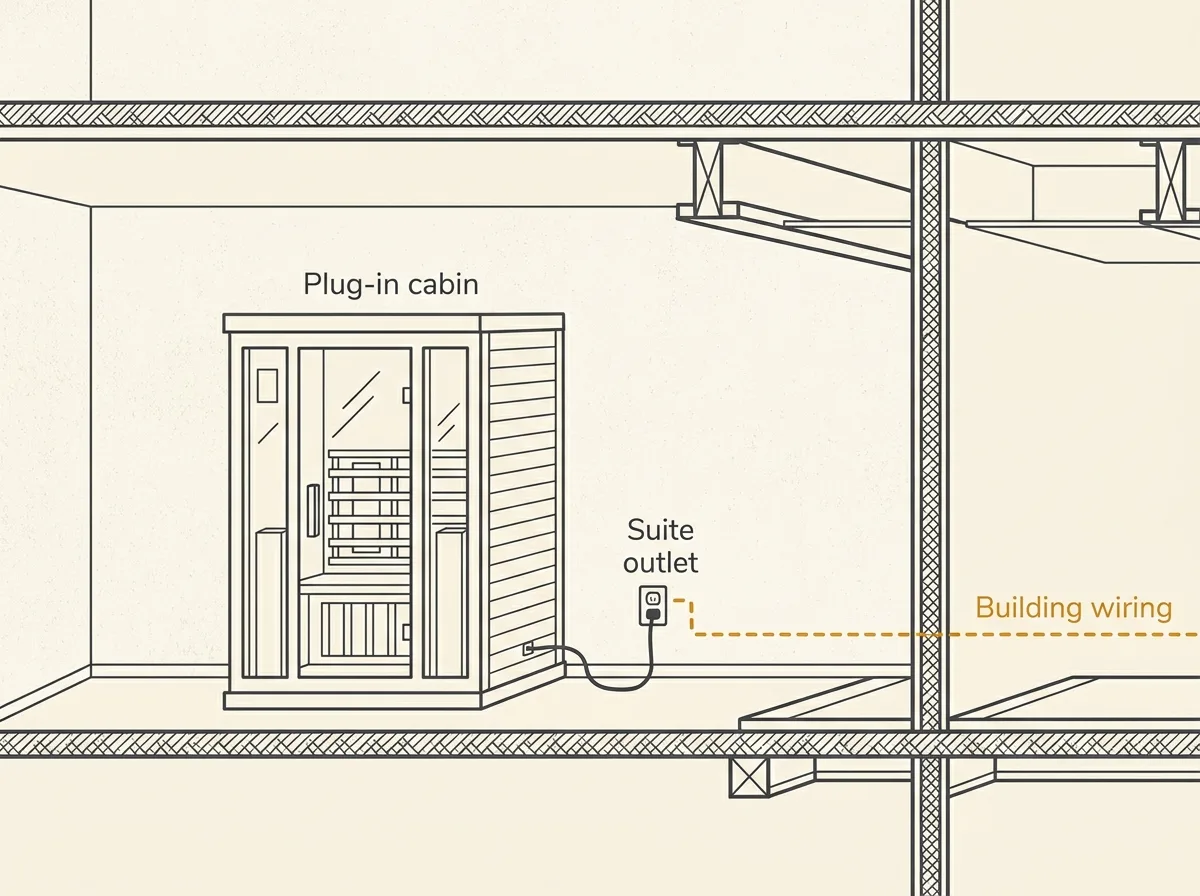
Why does a traditional sauna heater need new wiring?
A traditional sauna heater warms stones and air, and it needs a hardwired 240V circuit of its own, meaning a cable run permanently from the electrical panel rather than a plug.
RenoHouse, a Toronto renovation firm, prices a 30 to 40 amp circuit for a heater of up to 6 kW (kilowatts, the heater's power rating) at $800 to $1,800. It prices a 40 to 60 amp circuit for an 8 to 9 kW heater at $1,500 to $2,800. If an older Toronto home already runs at a full 100 amps, a panel upgrade costs $1,800 to $4,500 or more on RenoHouse's list.
A traditional room also needs building work. On RenoHouse's list, an exhaust fan ducted outside costs $500 to $1,500 and a 10 mm tempered glass door $600 to $1,800. It prices foil-faced insulation at $400 to $1,200 and a foil vapour barrier, the layer that keeps steam out of the walls, at $200 to $500. RenoHouse's do-it-yourself guide lists a floor drain, where one applies, at $1,200 to $3,500.
In a condo, much of that touches shared property. The Condominium Authority of Ontario says common elements include hallways, elevators and piping, and that most owner-proposed changes to common elements need board approval and a formal agreement under section 98 of the Condo Act. A duct through an outside wall or a new drain is a conversation with the board before it is a quote. The ESA rules guide covers the permit side of a hardwired heater.
What does the plug-in route cost, end to end?
The cabin sets the floor. On 16 September 2026 Relaxacare, a Burlington retailer, listed a Westinghouse 1 to 2 person infrared cabin at $2,499.99. Its listing gives the power as 120V, 15 amps and 1,500 watts, says no electrician is required, and puts the outside size at 39 by 36 inches and 73 inches tall. Relaxacare's collection page also listed a Westinghouse 2 to 3 person cabin at $2,749.99.
A Toronto contractor prices the same size higher. RenoHouse puts a prefab (factory-made) 1 to 2 person infrared cabin at $3,000 to $6,500.
Then come the small lines. Assembly alone is $300 to $800 on RenoHouse's list. Wellness Shop prices delivery of a one-person cabin with easy access at $100 to $300. RenoHouse's own table puts the outlet work for a plug-in cabin at $0 to $300, and its all-in figure for a plug-in cabin you assemble yourself in a GTA basement is $3,500 to $7,000.
When does a cabin stop being plug-in?
Size is what ends the plug-in route. RenoHouse's comparison table lists infrared saunas as running on 120V or 240V, so plug-in models are only part of the category. Relaxacare's product pages show where the line falls.
Its Icomfort 3 person corner cabin, at $3,299.99, still plugs into a standard 15 amp household outlet. Its Costway 3 to 5 person cabin, at $6,499.99, needs a 240V, 20 amp connection. Its Icomfort 5 to 6 person cabin, at $8,999.99, needs three separate dedicated 20 amp plugs and an electrician.
The costs follow. RenoHouse lists a prefab 3 to 4 person infrared cabin at $5,500 to $10,000, and a prefab infrared cabin professionally installed at $6,000 to $12,000 all in. Wellness Shop puts electrical hookup at $300 to over $2,500 for complex projects. Before you order, read the electrical line on the product page. It tells you whether an electrician, and your building, will be involved.
How does the cabin get through the door?
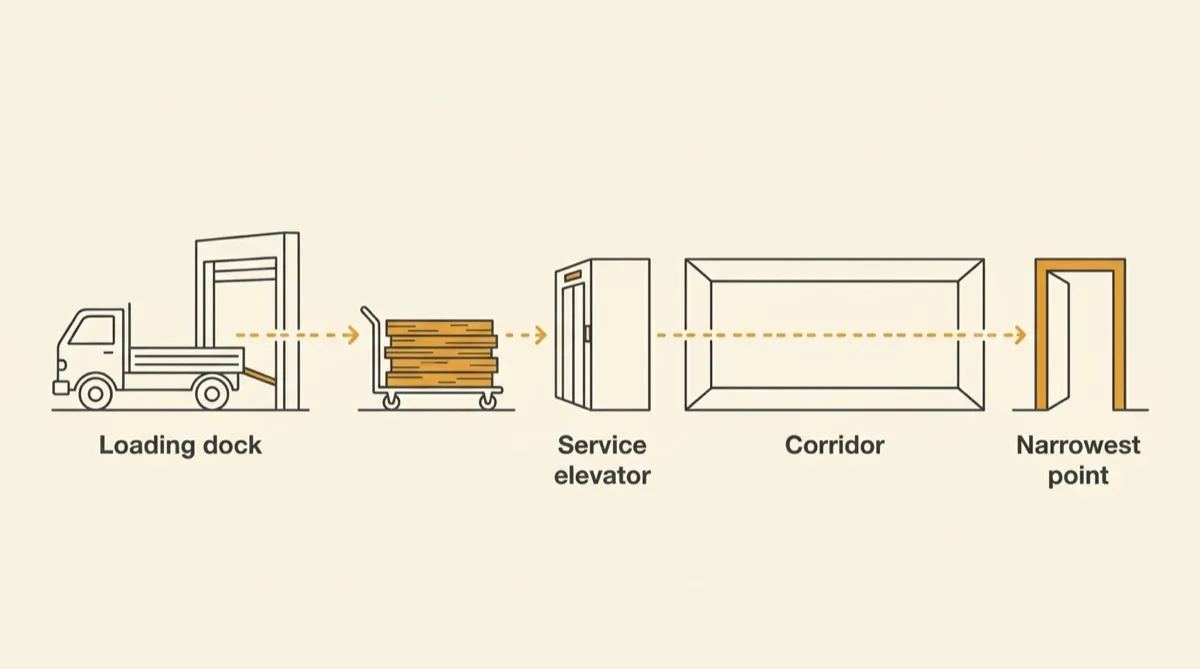
Wellness Shop's $100 to $300 delivery figure assumes easy access, and it puts challenging moves at up to $1,200. In a condo, ask the seller where its delivery ends, whether at the loading dock, the elevator or your door. Moving a flat-packed cabin the rest of the way is a separate arrangement that no source here prices.
The building sets those terms, such as booking the service elevator and protecting the hallway. This index holds no record of any building's rules. Measure the narrowest point on the route before you order, including the elevator, the corridor turns and your suite door. The Costway 3 to 5 person cabin, for example, weighs 412 pounds according to its listing.
Where do the downtown companies sit?
The index holds 39 companies, and 38 of them are listed under Saunas, so almost all of them are in scope for a cabin question. Few sit downtown: 2 are filed under CityPlace, 1 under Queen West and 1 under the Financial District. The map of where GTA sauna companies cluster shows the rest.
An address is not a delivery promise. The index knows where a business sits, not where it will deliver or what it charges to get there, and it holds no warranty terms or project history. Ask about your building, the elevator booking and the delivery route on the first call. The heating comparison behind the whole decision is on traditional versus infrared. SaunaIndex does not sell saunas or plunges and earns nothing from the retailers or companies named here; the about page explains how the site is run.
Frequently asked questions
Can a sauna go into a Toronto condo suite?
- Usually only as a plug-in infrared cabin. Ottawa Electric lists plug-in infrared as the route for renters, apartments and small spaces, with $0 to $400 of electrical work where the outlet already exists. This index holds no record of any building's rules, so read your condo's rules and ask management before you buy.
Does a plug-in infrared cabin still need an electrician?
- Sometimes. Ottawa Electric puts the electrical for a plug-in infrared cabin at $0 to $400 where the outlet already exists, and says a cabin that trips its breaker is usually sharing the circuit with something else. It puts a new dedicated 15 amp circuit at around $400 to $600 in most Ottawa homes. In a condo, ask the management office before that work starts.
What does the whole plug-in route come to?
- RenoHouse (Toronto) puts a plug-in infrared cabin you assemble yourself at $3,500 to $7,000 all in, as a 2026 GTA basement total. Wellness Shop, an Ontario Clearlight dealer, puts the monthly cost of running an infrared sauna in Ontario at $2 to $16.
Why will a traditional sauna heater not work in a condo?
- It needs a hardwired 240V circuit of its own. RenoHouse (Toronto) prices a 30 to 40 amp circuit for a heater up to 6 kW at $800 to $1,800. The Condominium Authority of Ontario says most owner changes to common elements, such as piping, need board approval and a section 98 agreement.
Does a plug-in infrared cabin need an ESA permit?
- Not according to Ottawa Electric, which lists a plug-in infrared cabin on a standard 120V, 15 amp outlet as needing no ESA permit and no building permit. A hardwired sauna on a 240V circuit does need an ESA permit on the same page. Check your building's own rules as well.
Sources
- Condominium Authority of Ontario - What are common elements in a condo and can you change them
- Ottawa Electric - Sauna Installation: Plug-In vs Hardwired Guide
- RenoHouse (Toronto) - Basement Sauna Installation Toronto: 2026 Cost and Permit Guide
- RenoHouse (Toronto) - DIY vs Professional Sauna Installation: Toronto Cost Comparison
- Relaxacare (Burlington, ON) - Indoor Saunas collection, prices in CAD, read 16 September 2026
- Relaxacare - Westinghouse 1-2 Person Sauna WES43-1600 (specifications)
- Relaxacare - Icomfort IC43-2100 Corner 3 Person Infrared Sauna
- Relaxacare - Costway 3 to 5 Person Far Infrared Corner Sauna
- Relaxacare - Icomfort 5 to 6 Person Full Spectrum 2 Tier Sauna
- Wellness Shop (Ontario) - How Much Does an Infrared Sauna Cost?